
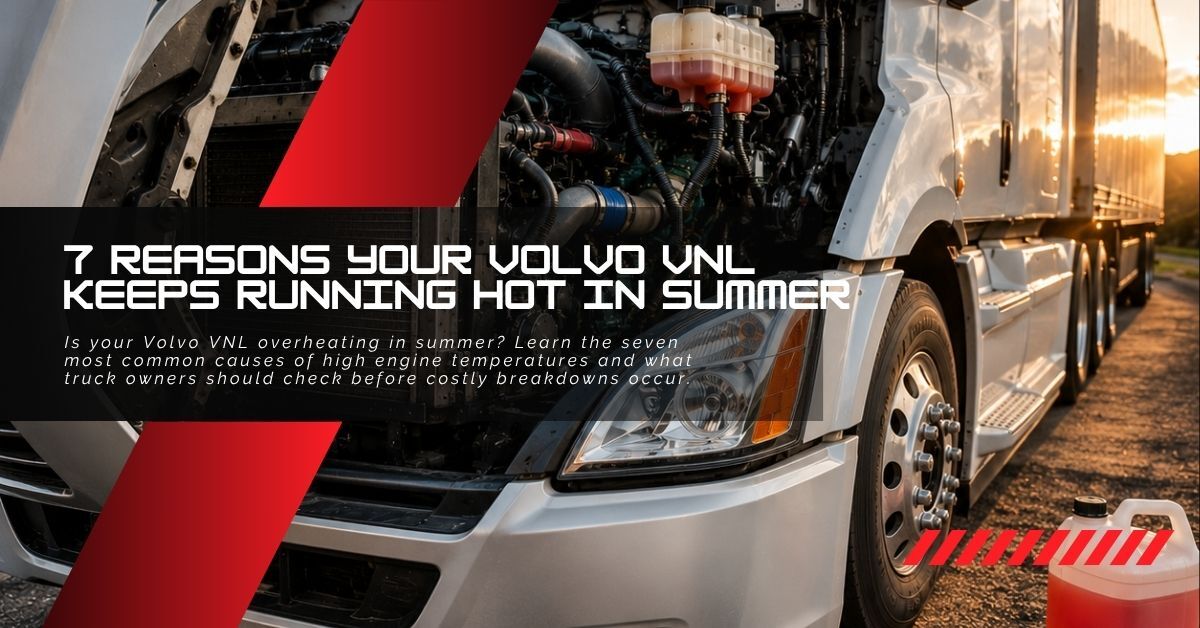
Why Summer Is Tough on Volvo VNL Trucks
Summer is one of the most demanding times of the year for trucking. Higher ambient temperatures, heavier freight loads, longer hauls, and increased engine stress can expose cooling system weaknesses that may have gone unnoticed during spring.
If your Volvo VNL is consistently running hotter than normal, it's usually a warning sign that something in the cooling system is no longer performing as it should.
The good news is that most overheating issues don't happen overnight. They typically start with small problems that become worse as temperatures climb.
Here are seven of the most common reasons a Volvo VNL runs hot during summer months.
1. A Failing Volvo VNL Fan Clutch
One of the most common overheating causes is a failing Volvo VNL fan clutch.
The fan clutch controls when the cooling fan engages. When engine temperatures rise, the fan clutch activates the fan to pull additional air through the radiator.
When it begins to fail, you may notice:
- Higher temperatures while climbing grades
- Increased temperatures in stop-and-go traffic
- Inconsistent cooling performance
- Reduced airflow through the radiator
A weak fan clutch may still function under light loads but struggle when temperatures and engine demands increase.
2. A Dirty or Restricted Radiator
Your radiator is responsible for removing heat from the cooling system.
Over time, dirt, bugs, road debris, and grime can accumulate on radiator fins and reduce airflow.
Common signs include:
- Gradual overheating
- Higher temperatures at highway speeds
- Reduced cooling efficiency
- Increased fan engagement
Even a partially blocked radiator can significantly reduce cooling performance during hot weather.
3. Low or Contaminated Coolant
Coolant is critical to heat transfer.
If coolant levels are low or the coolant has deteriorated, the system becomes less effective at controlling engine temperatures.
Problems can develop from:
- Small leaks
- Improper coolant mixtures
- Aging coolant
- Contamination within the cooling system
Routine coolant inspections are one of the simplest ways to prevent overheating issues.
4. Thermostat Problems
The thermostat regulates coolant flow through the engine and radiator.
When functioning properly, it opens and closes based on engine temperature.
When it fails:
- Coolant flow may become restricted
- Temperatures can spike rapidly
- Cooling system performance becomes inconsistent
A thermostat that sticks closed can cause severe overheating in a surprisingly short amount of time.
5. Cooling System Hoses Beginning to Fail
Cooling hoses are often overlooked because they usually fail gradually.
As hoses age, they may:
- Develop internal restrictions
- Become soft or weak
- Collapse under pressure
- Develop small leaks
Even minor hose issues can reduce coolant circulation and increase operating temperatures.
Summer heat often accelerates hose deterioration.
6. Airflow Restrictions Around the Front End
Many truck owners focus exclusively on internal cooling components while overlooking airflow.
Proper cooling depends on a steady stream of air moving through:
- The grille
- Charge air cooler
- Condenser
- Radiator
Airflow can be reduced by:
- Dirt and debris buildup
- Damaged components
- Misaligned panels
- Obstructions in front of the radiator
Even seemingly minor airflow restrictions can create major cooling issues under load.
7. Heavy Freight Loads and Summer Heat
Sometimes there is nothing "broken" at all.
The combination of:
- Higher outside temperatures
- Heavy cargo
- Mountain grades
- Long hours of operation
creates more heat than the system is used to handling.
A cooling system that is already marginal can quickly become overwhelmed during peak summer freight season.
This is why many experienced drivers proactively inspect Volvo truck parts before temperatures reach their highest levels.
Warning Signs Your Volvo VNL Is Starting to Overheat
Watch for these early indicators:
- Temperature gauge creeping higher than normal
- Fan running more frequently
- Coolant loss
- Reduced engine performance
- Warning lights on the dash
- Engine temperatures increasing under load
Addressing these symptoms early can help avoid expensive repairs and roadside downtime.
How to Prevent Volvo VNL Overheating This Summer
Preventative maintenance remains the most effective strategy.
Recommended inspections include:
- Fan clutch operation
- Radiator condition
- Coolant levels and quality
- Hose integrity
- Thermostat performance
- Front-end airflow pathways
Identifying small problems before summer freight season peaks can save significant time and money.
Common Questions About Volvo VNL Overheating
Why does my Volvo VNL overheat only in summer?
Summer temperatures place more demand on the cooling system. Weak components that performed adequately during cooler months may struggle when ambient temperatures rise.
Can a bad fan clutch cause a Volvo VNL to overheat?
Yes. A failing fan clutch may not provide sufficient airflow through the radiator, especially during heavy loads or slow-moving traffic.
What should I check first if my Volvo VNL is running hot?
Start by inspecting coolant levels, radiator condition, airflow restrictions, and fan clutch operation.
QSC Truck Parts: Quality Aftermarket Volvo Truck Parts
When cooling system problems arise, having access to dependable replacement components is critical.
QSC Truck Parts offers high-quality aftermarket Volvo truck parts designed to provide reliable performance without OEM pricing. Whether you're replacing a worn Volvo VNL fan clutch or preparing your truck for summer freight season, choosing quality components helps reduce downtime and improve long-term reliability.
If you've been searching for a trusted Volvo truck parts store near me, QSC Truck Parts provides a wide selection of aftermarket parts built for real-world trucking conditions.
Final Thoughts
A Volvo VNL that keeps running hot in summer is usually giving you plenty of warning before a major failure occurs.
The most common causes include fan clutch problems, radiator restrictions, coolant issues, thermostat failures, deteriorating hoses, airflow restrictions, and increased summer workloads.
By identifying these issues early and replacing worn components before they fail, you can keep your truck running cooler, avoid costly downtime, and stay productive throughout the busiest months of the year.
