
Why Overheating Is One of the Most Expensive Truck Problems
Overheating is one of the most common—and costly—issues for semi trucks. What starts as a minor cooling problem can quickly turn into major engine damage, downtime, and lost revenue.
The challenge is that overheating rarely comes from just one issue. It usually involves a combination of components within the cooling system.
Three of the most critical parts are:
- The fan clutch
- The radiator
- The thermostat
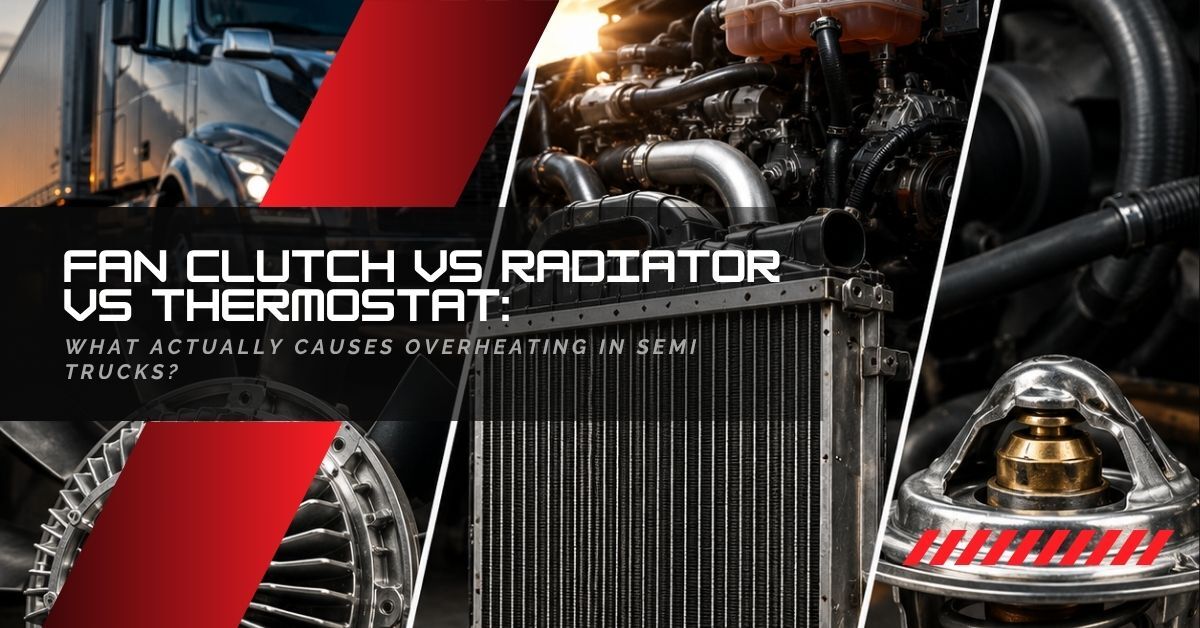
Understanding how each one works—and how it fails—is the key to diagnosing overheating correctly.
Many drivers don’t address these issues until they’re already searching for reliable semi trucks parts after a breakdown—but by then, the damage is often already done.
The Fan Clutch: Controlling Airflow When It Matters Most
The fan clutch regulates when the cooling fan engages.
When engine temperature rises, the fan clutch activates the fan to pull air through the radiator. When cooling demand is lower, it disengages to improve efficiency.
Common Fan Clutch Problems:
- Fan not engaging when temperatures rise
- Fan stuck running constantly
- Weak airflow through the radiator
- Increased engine temperature under load
For trucks like the Volvo VNL, a failing fan clutch can quickly lead to overheating—especially during heavy hauling or hot weather.
If airflow is not being properly controlled, the entire cooling system becomes less effective.
The Radiator: The Core of the Cooling System
The radiator is responsible for dissipating heat from the engine by transferring it to the air flowing through it.
Common Radiator Problems:
- Clogged or blocked fins
- Coolant leaks
- Internal corrosion
- Reduced airflow due to debris
When the radiator cannot properly release heat, temperatures rise—even if the rest of the system is functioning.
Radiator issues often develop slowly, making them harder to detect until overheating becomes consistent.
The Thermostat: Regulating Engine Temperature
The thermostat controls coolant flow based on engine temperature.
- When the engine is cold, it stays closed to allow warming
- When the engine heats up, it opens to allow coolant circulation
Common Thermostat Problems:
- Stuck closed (causes rapid overheating)
- Stuck open (engine runs too cool, reducing efficiency)
- Delayed response to temperature changes
A faulty thermostat can disrupt the entire cooling system, even if the radiator and fan clutch are working properly.
How These Components Work Together
Overheating often occurs when one or more of these components fail to work together properly.
For example:
- A working radiator cannot cool properly without airflow from the fan clutch
- A functioning fan clutch cannot help if coolant is not circulating due to a bad thermostat
- A thermostat cannot regulate temperature if heat is not being removed by the radiator
This is why diagnosing overheating requires looking at the system as a whole—not just one part.
What Actually Causes Overheating in Semi Trucks
In real-world scenarios, overheating is usually caused by:
- Weak airflow (fan clutch issues)
- Poor heat dissipation (radiator problems)
- Improper coolant flow (thermostat failure)
- Combined wear across multiple components
This is especially common during long hauls, high temperatures, and heavy workloads—when trucks rely heavily on durable semi truck accessories and cooling components to maintain performance.
Signs You’re Dealing With a Cooling System Problem
Recognizing the early signs can prevent major damage.
Look for:
- Rising temperature gauge
- Overheating under load
- Coolant leaks
- Increased fan noise or lack of engagement
- Inconsistent engine temperature
Ignoring these warning signs often leads to more serious repairs—and more time spent searching for a dependable semi truck parts store near me after the fact.
How to Diagnose the Problem Quickly
When overheating occurs, a step-by-step approach helps identify the cause.
Step 1: Check Airflow
Listen for fan engagement and inspect airflow through the radiator.
Step 2: Inspect Coolant System
Check coolant levels, leaks, and overall condition.
Step 3: Monitor Temperature Behavior
Look for patterns—does it overheat under load, at idle, or constantly?
Step 4: Evaluate Components
Inspect the fan clutch, radiator, and thermostat individually.
Accurate diagnosis saves time, money, and unnecessary part replacements.
Preventing Overheating Before It Starts
Preventative maintenance is the best defense against overheating.
Key steps include:
- Regular cooling system inspections
- Replacing worn components early
- Keeping the radiator clean and unobstructed
- Monitoring engine performance during long hauls
Proactive maintenance is always less expensive than reactive repairs.
Common Questions About Semi Truck Overheating
What is the most common cause of overheating in semi trucks?
The most common causes include fan clutch failure, radiator blockages, and thermostat malfunction, often combined with general wear in the cooling system.
Can a bad fan clutch cause overheating?
Yes, if the fan clutch does not engage properly, airflow through the radiator is reduced, leading to higher engine temperatures.
How do you know if a thermostat is bad in a semi truck?
A faulty thermostat may cause rapid overheating, inconsistent temperature readings, or an engine that does not warm up properly.
QSC Truck Parts — Built for Performance and Reliability
When overheating becomes a concern, having access to dependable parts is critical.
QSC Truck Parts provides high-quality aftermarket semi trucks parts designed to handle real-world conditions. From cooling system components to everyday replacements, their parts are built for durability, performance, and long-term reliability.
Whether you're replacing a failing fan clutch, upgrading your cooling system, or preparing for peak freight season, choosing the right parts helps keep your truck on the road and operating efficiently.
Final Thoughts
Overheating in semi trucks is rarely caused by a single issue. It’s usually the result of multiple components working inefficiently together.
Understanding how the fan clutch, radiator, and thermostat function—and how they fail—makes it easier to diagnose problems early and avoid costly downtime.
The key is staying proactive. When you address small issues before they escalate, you protect your engine, your schedule, and your bottom line.
