
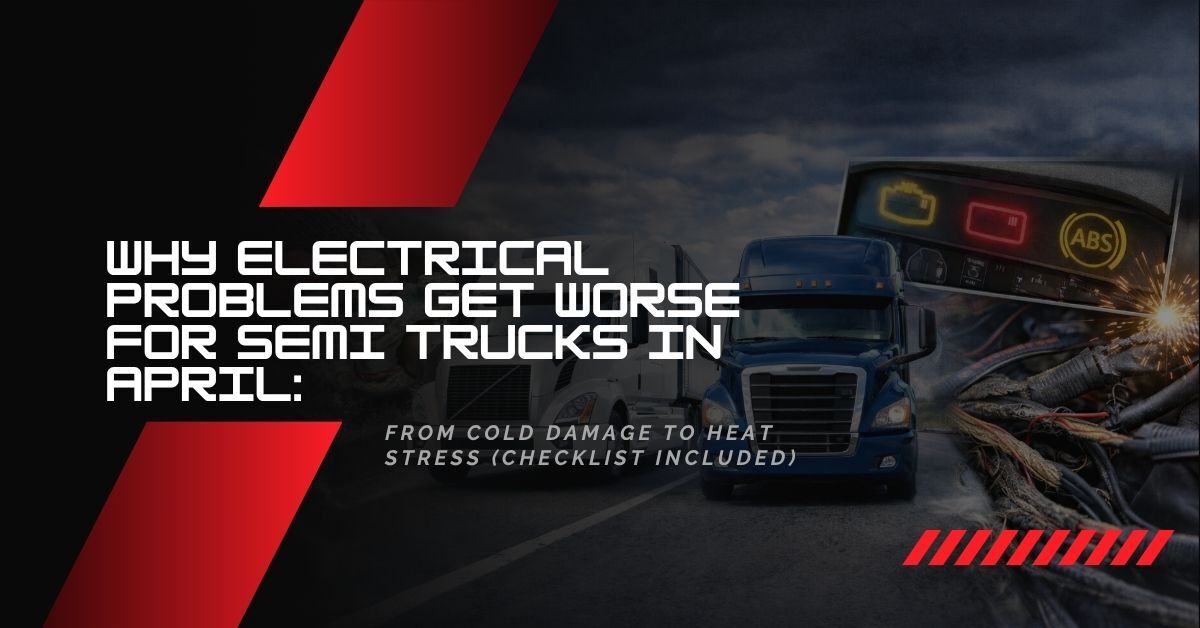
The April Electrical Spike: What’s Really Happening
April is when electrical problems begin showing up across fleets and owner-operator trucks. What seemed like minor issues during winter—slow starts, dim lights, occasional warnings—often turn into consistent failures once temperatures rise and usage increases.
This is not a coincidence. Electrical systems are heavily impacted by both cold weather and increased spring demand. When those two forces meet, weak components fail quickly.
For many drivers, this is the point where they start looking for a dependable semi truck parts store near me to replace failing electrical components before they cause downtime.
From Cold Damage to Heat Stress: Why April Causes Failures
Electrical systems go through two major phases:
Phase 1: Winter Damage
Cold temperatures reduce battery capacity, stiffen wiring, and expose connections to moisture and corrosion. Even if the system keeps working, it is often weakened.
Phase 2: Spring Load Increase
In April, trucks run more frequently, electrical systems operate under higher demand, and heat begins to build. This added stress pushes already weakened components past their limits.
This is especially noticeable in trucks like the Volvo VNL, where electrical systems play a critical role in engine management and performance monitoring.
The Most Common April Electrical Failures
Weak or Failing Batteries
Cold weather reduces battery efficiency. By April, many batteries are already near failure and cannot keep up with demand.
Corroded Terminals and Connections
Moisture and road exposure lead to corrosion, which disrupts electrical flow and causes inconsistent performance.
Bad Ground Connections
Grounding issues are one of the most overlooked causes of electrical problems. Poor grounding can lead to erratic system behavior and sensor failures.
Sensor Malfunctions
Modern trucks rely heavily on sensors. Electrical inconsistencies can trigger false readings, warning lights, or performance issues.
Damaged Wiring
Wiring can become brittle in cold weather and degrade over time, leading to shorts or intermittent failures.
For trucks like the Freightliner Cascadia, these issues often show up as dashboard alerts, lighting problems, or inconsistent system performance.
Why Electrical Problems Should Not Be Ignored
Electrical issues are often dismissed because the truck is still running. However, these problems tend to escalate quickly.
Ignoring electrical problems can lead to:
- Starting failures
- Sensor inaccuracies
- Reduced engine performance
- Safety risks
- Unexpected breakdowns
Replacing worn components early using reliable semi trucks parts is far more cost-effective than dealing with emergency repairs.
April Electrical Checklist: What to Inspect First
Battery Health
- Test voltage and charge capacity
- Replace weak or aging batteries
- Ensure secure mounting
Terminals and Connections
- Clean corrosion from battery terminals
- Tighten all connections
- Apply protective coatings if needed
Ground Connections
- Inspect grounding points
- Ensure clean, solid contact
- Replace damaged ground wires
Wiring and Harnesses
- Look for cracks, wear, or exposed wires
- Repair or replace damaged sections
Sensors and Diagnostics
- Check for warning lights
- Run diagnostic scans if needed
- Replace faulty sensors
Alternator Performance
- Verify proper charging output
- Inspect belts and connections
Using quality semi truck accessories and electrical components can significantly reduce the risk of recurring issues.
How to Prevent Electrical Failures in Spring
The best approach is preventative maintenance. A thorough inspection in April can eliminate most common electrical problems before they lead to breakdowns.
Key steps include:
- Testing battery systems early
- Cleaning and securing all connections
- Replacing worn wiring and components
- Monitoring system performance under load
- Addressing warning signs immediately
Common Questions About Semi Truck Electrical Problems
Why do electrical problems get worse in April for semi trucks?
Electrical problems worsen in April because winter weakens batteries and wiring, and increased spring usage puts additional stress on already damaged components.
What are the most common electrical issues in semi trucks after winter?
The most common issues include weak batteries, corroded terminals, bad ground connections, sensor failures, and damaged wiring.
How do you fix electrical problems in a semi truck?
Electrical problems are fixed by testing battery performance, cleaning connections, repairing or replacing wiring, checking ground points, and replacing faulty sensors.
Relevant Blogs
- Spring Thaw Problems: Why March Is When Hidden Winter Damage Shows Up on Semi Trucks
- March Maintenance Checklist for Freightliner Cascadia and Volvo VNL Trucks: Preparing Semi Trucks for Spring DOT Inspections
Final Thoughts
April is when electrical systems are tested the most. The combination of winter damage and increased demand creates the perfect conditions for failure.
The good news is that most of these problems are predictable—and preventable. A simple inspection and early replacement of weak components can keep your truck reliable through the busiest months of the year.
For operators who stay ahead of these issues, April becomes a checkpoint—not a breakdown point.
