
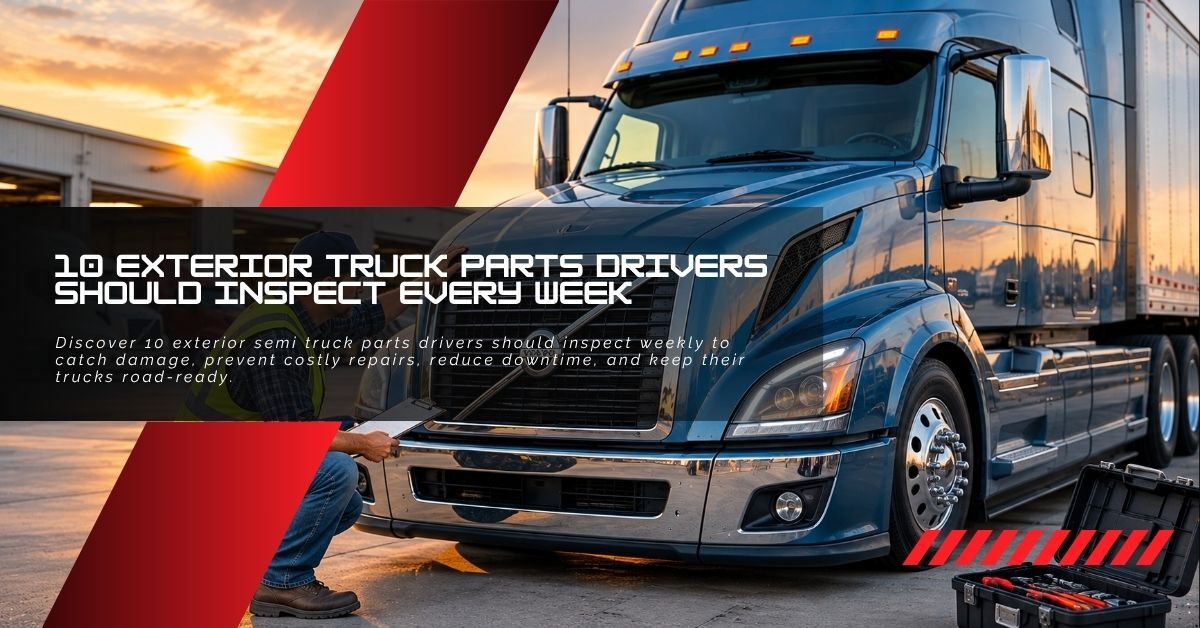
A semi truck can travel thousands of miles in a single week, facing everything from highway debris and rough pavement to tight loading docks, heavy rain, and changing temperatures.
Over time, those conditions can take a toll on exterior components.
A slightly loose mirror, cracked grille, damaged bumper bracket, or worn fairing mount might not seem urgent at first. But when those problems go unnoticed, vibration and continued use can turn relatively small repairs into more expensive ones.
That's why regular exterior inspections matter.
For owner-operators and fleet managers, checking common wear points is one of the simplest ways to identify problems before they affect operations.
Whether you're maintaining a Volvo VNL, Freightliner Cascadia, or another commercial truck, understanding which semi truck parts deserve attention can help reduce unexpected repairs and downtime.
Here are 10 exterior truck components worth inspecting every week, in addition to required pre-trip, post-trip, and scheduled maintenance inspections.
1. Side Mirrors and Mirror Mounting Brackets
Mirrors are among the most frequently used exterior components on a semi truck.
Drivers depend on them for lane changes, merging, backing, and navigating tight delivery locations.
Unfortunately, mirrors are also vulnerable to damage from loading docks, branches, nearby vehicles, and other obstacles.
During your weekly inspection, look for:
- Cracked or chipped mirror glass
- Loose mounting brackets
- Excessive movement
- Damaged housings
- Broken adjustment mechanisms
- Missing or loose fasteners
Pay particular attention to mirrors that begin vibrating at highway speeds.
A mirror that appears stable while parked may move considerably once wind pressure increases.
For Volvo VNL operators, our article Why Does My Volvo VNL Mirror Shake While Driving? explains common causes of mirror vibration and what to inspect.
If your truck regularly operates around tight loading docks, you may also find Common Volvo VNL Mirror Damage After Tight Deliveries helpful.
Why it matters: A damaged mirror can reduce visibility, while loose mounting hardware may eventually cause additional damage to the assembly.
2. Front Bumpers and Mounting Hardware
Semi truck bumpers face constant exposure to road debris, parking obstacles, loading areas, and minor impacts.
Even when a bumper looks relatively intact, its mounting points may have sustained damage.
Check for:
- Cracks or missing sections
- Loose mounting hardware
- Bent brackets
- Uneven alignment
- Sagging bumper corners
- Damage around attachment points
A bumper that no longer sits correctly may interfere with surrounding components.
On aerodynamic trucks, significant front-end damage can also change the intended airflow around the vehicle.
Our related article, Can a Damaged Freightliner Cascadia Bumper Affect Cooling?, explains why bumper condition can matter beyond appearance.
Why it matters: Identifying bumper damage early can help prevent loose components, additional mounting damage, and unnecessary replacement costs.
3. Grilles and Grille Mounting Points
A semi truck grille does more than give the vehicle its distinctive appearance.
It protects portions of the front-end assembly while allowing air to pass toward cooling components.
Over time, grilles can develop cracks, broken mounting tabs, or loose sections.
Inspect for:
- Cracked grille sections
- Missing pieces
- Loose mounting points
- Bent or damaged supports
- Obstructed openings
- Uneven alignment
Damage caused by road debris may not always be obvious from a distance.
Look closely at the grille's attachment points, particularly after an impact.
For Freightliner operators, Freightliner Cascadia Grille Damage: More Than Just Appearance explains why grille damage deserves attention.
Why it matters: A damaged grille can compromise mounting integrity, reduce protection for nearby components, or interfere with intended airflow when openings become obstructed.
4. Hood Hinges, Latches, and Alignment
A hood that sits slightly crooked may appear to be a cosmetic issue.
However, changes in hood alignment can indicate problems with hinges, latches, brackets, or mounting hardware.
During your inspection, look for:
- Uneven gaps between panels
- Difficulty opening or closing the hood
- Loose or damaged hinges
- Worn latch components
- Unusual movement
- Fresh rubbing marks
- Misalignment around the grille or headlights
A hood that becomes difficult to secure should be inspected before the truck returns to service.
Proper alignment helps maintain clearance between surrounding components and prevents unnecessary stress on mounting hardware.
For additional information, read Why Freightliner Cascadia Hood Alignment Affects Performance.
Why it matters: Hood alignment problems can create vibration, panel rubbing, latch issues, and damage to surrounding exterior components.
5. Cab Fairings and Aerodynamic Panels
Modern semi trucks rely on aerodynamic components to help manage airflow around the cab and trailer.
These panels can become damaged by road debris, vibration, weather exposure, and minor impacts.
Inspect for:
- Cracks
- Loose panels
- Missing fasteners
- Unusual movement
- Damaged edges
- Misalignment
- Signs of repeated rubbing
A loose fairing may produce rattling or vibration that becomes more noticeable at highway speeds.
For long-haul drivers, keeping aerodynamic components securely mounted helps maintain the truck's intended exterior configuration.
Why it matters: Damaged or missing fairings can affect the truck's aerodynamic profile and create additional stress on nearby mounting points.
6. Fairing Brackets and Supports
Fairing brackets are easy to overlook because they are smaller and less visible than the panels they support.
But those brackets play an important role in keeping aerodynamic components securely positioned.
A cracked or bent bracket can allow a larger fairing to move.
Over time, that movement may damage the panel itself.
Look for:
- Bent supports
- Cracked mounting points
- Loose fasteners
- Missing hardware
- Rust or corrosion
- Excessive fairing movement
Volvo VNL drivers should pay particular attention to wind cab fairing brackets.
Our article 7 Signs Your Volvo VNL Wind Cab Fairing Brackets Need Replacement explains common warning signs and when replacement may be necessary.
When selecting replacement aftermarket Volvo truck parts, always verify compatibility with the truck's model year and configuration.
Why it matters: Replacing a damaged bracket early may prevent damage to a much larger and more expensive aerodynamic panel.
7. Headlights, Marker Lights, and Exterior Light Housings
Exterior lighting is essential for commercial truck visibility and communication with other motorists.
A weekly inspection should go beyond checking whether the lights turn on.
Examine the condition of the housings and mounting points as well.
Look for:
- Cracked lenses
- Moisture inside housings
- Loose assemblies
- Damaged connectors
- Broken mounting tabs
- Missing or nonfunctioning lights
- Corrosion around connections
A light may continue operating even when its housing is damaged.
However, moisture and contamination can eventually affect electrical connections and internal components.
When purchasing replacement semi truck parts, verify that lighting components match the vehicle's specific application.
Why it matters: Properly functioning and securely mounted exterior lights support visibility and help prevent electrical problems caused by damaged housings.
8. Steps, Grab Handles, and Entry Components
Drivers enter and exit their trucks multiple times throughout the day.
That makes steps, grab handles, and entry-related components important areas to inspect.
These parts experience repeated use, weather exposure, and contamination from dirt, grease, and road debris.
Check for:
- Loose mounting hardware
- Bent steps
- Cracked supports
- Damaged grip surfaces
- Corrosion
- Missing fasteners
- Excessive movement
A step that begins moving under pressure or a loose grab handle should receive immediate attention.
Why it matters: Worn or damaged entry components can create unnecessary injury risks and become more expensive to repair if mounting damage spreads.
9. Fenders, Splash Guards, and Mud Flaps
Fenders, splash guards, and mud flaps are exposed to water, gravel, debris, and constant road vibration.
Because these components sit near the wheels, they can experience significant wear.
During your inspection, look for:
- Torn mud flaps
- Loose brackets
- Cracked fenders
- Missing mounting hardware
- Excessive movement
- Contact with tires
- Damaged splash guards
Also inspect the supporting brackets.
A replacement panel may not remain secure if its mounting hardware is already damaged.
For fleets purchasing aftermarket semi truck parts, correct fitment is especially important for components installed near moving wheels.
Why it matters: Damaged or loose components can detach, interfere with surrounding equipment, or fail to provide their intended protection from road spray and debris.
10. Exterior Fasteners, Brackets, and Mounting Points
One of the most overlooked areas during exterior inspections is also one of the most important.
Mounting hardware holds many larger truck components in place.
That includes:
- Mirrors
- Bumpers
- Grilles
- Fairings
- Light assemblies
- Exterior panels
- Steps
- Fenders
A missing bolt or cracked bracket may seem insignificant compared with the larger component it supports.
But repeated highway vibration can make a small mounting problem worse.
During your weekly inspection, look for loose, missing, bent, or damaged hardware.
Also pay attention to new rattling sounds, unusual panel movement, or gaps that weren't present before.
Why it matters: Addressing mounting problems early can help prevent additional damage and avoid replacing larger components unnecessarily.
Why Weekly Exterior Inspections Can Save Money
The biggest advantage of regular inspections isn't simply finding damaged components.
It's finding them early.
Consider a loose fairing bracket.
If discovered during a routine inspection, the repair may involve replacing a relatively small component.
If ignored, the loose bracket may allow the fairing to move repeatedly until the panel cracks or breaks.
Now the repair may involve several components instead of one.
The same pattern can occur with mirrors, bumpers, grilles, and other exterior parts.
For owner-operators and fleet managers, regular inspections can help:
- Identify wear before additional damage develops
- Reduce unexpected downtime
- Improve maintenance planning
- Avoid unnecessary component replacements
- Protect surrounding parts
- Make parts purchasing more predictable
The goal isn't to replace every component showing minor cosmetic wear.
It's to identify which problems affect fitment, mounting integrity, visibility, or functionality.
When Should Exterior Semi Truck Parts Be Replaced?
Not every scratch, dent, or cosmetic imperfection requires replacement.
However, replacement may be appropriate when a component:
- Has broken mounting points
- Cannot remain securely attached
- Interferes with another component
- Has significant structural cracks
- No longer performs its intended function
- Has sustained extensive impact damage
- Cannot be properly repaired or adjusted
The key is determining whether the damage affects functionality.
A small cosmetic scratch on a bumper is different from a broken bumper bracket.
Likewise, a slightly faded fairing isn't the same as a fairing that moves excessively at highway speeds.
Inspect the underlying problem before ordering replacement parts.
Why Aftermarket Semi Truck Parts Make Sense for Routine Repairs
Commercial trucks experience considerable wear over their service lives.
For owner-operators and fleet managers, replacing damaged exterior components is part of normal maintenance.
Quality aftermarket replacement parts can provide a practical alternative to OEM components, particularly for common exterior repairs.
Depending on the application, aftermarket options may be available for:
- Bumpers
- Grilles
- Mirrors
- Fairing components
- Brackets
- Exterior lighting
- Fenders
- Other body components
When comparing replacement parts, consider fitment, construction, availability, installation requirements, and total repair cost.
A lower purchase price isn't necessarily a better value if the component doesn't fit correctly.
For operators looking for semi truck parts in Orange County, QSC Truck Parts provides aftermarket replacement options for commercial truck applications.
How Fleet Managers Can Use Weekly Inspections to Reduce Downtime
For fleets operating multiple trucks, exterior inspections can also provide useful maintenance data.
If the same components are repeatedly damaged across several vehicles, that information can help improve purchasing and inventory planning.
Fleet managers should track:
- Which components require frequent replacement
- Truck make and model
- Common causes of damage
- Parts availability
- Repair costs
- Installation time
- Repeat failures
Over time, these records can reveal patterns.
Perhaps a particular mirror assembly is frequently damaged during tight deliveries.
Maybe certain fairing brackets develop problems after extended highway use.
Identifying those patterns helps maintenance departments plan ahead.
For more information, read How Parts Availability Can Make or Break a Truck Fleet's Maintenance Strategy.
Choosing the Right Semi Truck Parts Supplier
When exterior components need replacement, the supplier matters.
Drivers and fleets should look beyond the lowest advertised price.
Consider:
- Product compatibility
- Aftermarket selection
- Clear fitment information
- Parts availability
- Shipping options
- Product specifications
- Overall value
For Southern California operators searching for a semi truck parts store in Orange County, having a dependable source for compatible replacement components can make maintenance planning easier.
The same principle applies to semi truck accessories in Orange County.
The best purchasing decision considers the total cost of getting the truck back into service, not simply the price of the replacement component.
Frequently Asked Questions
What exterior semi truck parts should drivers inspect most often?
Drivers should regularly inspect mirrors, lights, bumpers, grilles, hood components, fairings, brackets, steps, fenders, mud flaps, and exterior mounting hardware. These checks supplement required vehicle inspections.
Can damaged exterior truck parts affect fuel economy?
Certain damaged or missing aerodynamic components can disrupt the truck's intended airflow. Significant fairing damage, missing panels, or severe front-end misalignment may affect aerodynamic efficiency.
Are aftermarket semi truck parts reliable?
Quality aftermarket parts can be a practical replacement option when they are designed for the correct application and provide appropriate fitment, construction, and functionality.
Should a cracked semi truck bumper always be replaced?
Not necessarily. The decision depends on the location and severity of the damage, mounting integrity, and whether the bumper can continue performing its intended function.
Why do semi truck mirrors shake at highway speeds?
Possible causes include loose mounting hardware, damaged brackets, worn components, cracked housings, or internal mirror movement. Wind pressure at highway speeds can make existing looseness more noticeable.
How can fleets reduce exterior truck repair costs?
Regular inspections, early repairs, accurate maintenance records, reliable parts sourcing, and standardizing compatible replacement components can help reduce unnecessary expenses.
Where can I buy aftermarket semi truck parts in Orange County?
Drivers and fleet operators can explore aftermarket replacement components through QSC Truck Parts. Always verify the correct truck model, model year, and application before ordering.
Final Thoughts: Small Exterior Problems Can Lead to Bigger Repairs
A weekly exterior inspection doesn't need to be complicated.
A few minutes spent checking mirrors, bumpers, grilles, fairings, brackets, lighting, and mounting hardware can help identify problems before they become more expensive.
The key is consistency.
Commercial trucks experience constant vibration, weather exposure, road debris, and repeated use. Even components that appear relatively minor can affect surrounding parts when they become loose or damaged.
For owner-operators, regular inspections help protect their investment.
For fleet managers, they provide an opportunity to reduce downtime, plan maintenance, and control replacement costs.
And when components do need replacement, choosing properly fitting aftermarket parts can help keep repairs practical and cost-effective.
Need Replacement Semi Truck Parts?
QSC Truck Parts offers a selection of semi truck parts, Volvo truck parts, and Freightliner truck parts for owner-operators, repair facilities, and commercial fleets.
Explore our aftermarket replacement options and find compatible components for your truck.
Related Reading
- Why Freightliner Cascadia Hood Alignment Affects Performance
- Freightliner Cascadia Grille Damage: More Than Just Appearance
- 7 Signs Your Volvo VNL Wind Cab Fairing Brackets Need Replacement
- Common Volvo VNL Mirror Damage After Tight Deliveries
- Which Semi Truck Accessories Actually Make a Difference for Long-Haul Drivers?
