
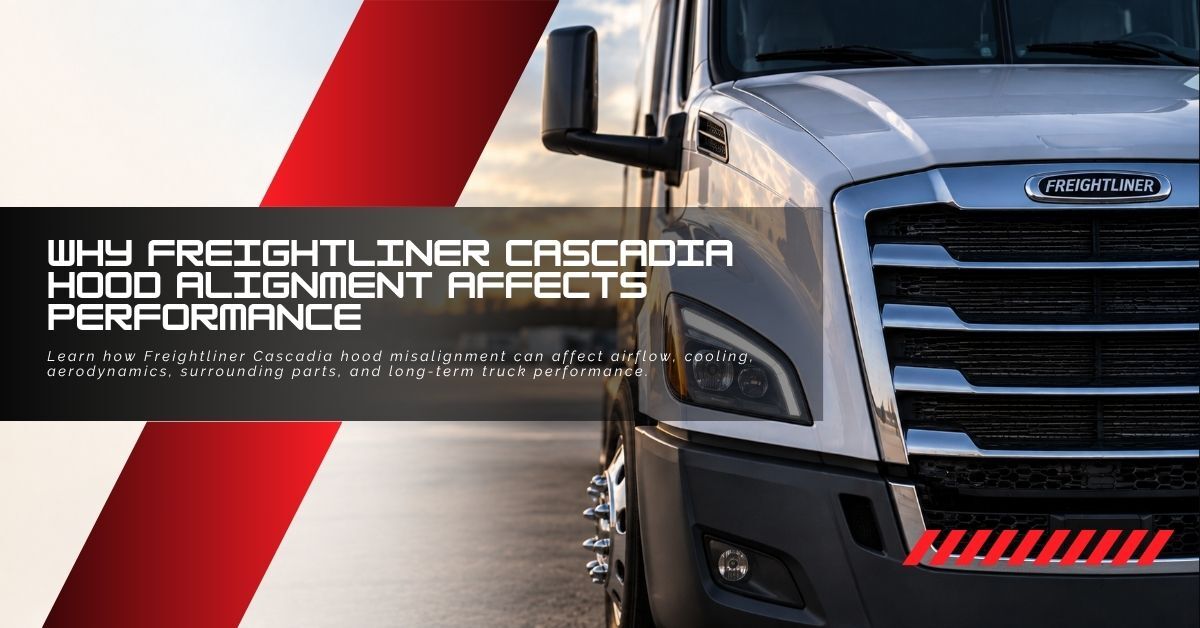
A Freightliner Cascadia hood that sits slightly crooked may look like a cosmetic problem.
It isn't always.
The hood is part of a larger front-end system that includes the grille, bumper, headlights, mounting hardware, aerodynamic surfaces, and cooling openings. These components are designed to sit in specific positions relative to one another.
When the hood becomes misaligned, gaps can change, panels may rub, latches can experience uneven pressure, and surrounding components may no longer sit where they should.
For an owner-operator, technician, or fleet manager, the important question isn't simply whether the hood looks straight.
It's why the alignment changed in the first place.
A Freightliner Cascadia hood that suddenly sits differently can point to worn hardware, damaged mounts, previous front-end impact, or problems with adjacent Freightliner Cascadia parts.
What Does Freightliner Cascadia Hood Misalignment Look Like?
Hood alignment problems aren't always dramatic.
Sometimes the difference is only noticeable when comparing the driver and passenger sides of the truck.
Common signs include:
- Uneven gaps between the hood and cab
- One side sitting higher than the other
- Hood corners no longer lining up properly
- Difficulty opening or closing the hood
- Latches requiring unusual force
- Grille or headlight gaps looking uneven
- Hood movement or vibration while driving
- Rubbing between adjacent panels
- Changes after a minor front-end impact
If the alignment has gradually changed, drivers who operate the truck every day may notice it before anyone else.
That's worth investigating.
Why Hood Alignment Matters on a Freightliner Cascadia
Modern aerodynamic trucks aren't simply collections of independent exterior panels.
The hood, grille, bumper, fairings, and surrounding components work together to create the front-end shape of the truck.
That shape matters for several reasons.
It influences how air travels around and through the front of the vehicle, how exterior components fit together, and how securely those components remain mounted during highway operation.
A badly misaligned hood can therefore have consequences beyond appearance.
1. Hood Alignment Can Affect Front-End Airflow
The Cascadia's front end is designed to manage airflow while the truck is traveling at highway speeds.
Air needs to move around the truck efficiently while sufficient airflow reaches the cooling system.
When the hood isn't sitting correctly, the intended gaps and transitions between exterior panels can change.
This doesn't mean every slightly uneven hood will cause an overheating problem.
But significant misalignment, particularly when combined with damaged grilles, bumpers, seals, or surrounding panels, deserves attention.
Airflow issues become even more important when a truck is already operating under demanding conditions such as:
- High outside temperatures
- Heavy freight loads
- Mountain routes
- Long climbs
- Stop-and-go operation
- Extended summer driving
Front-end condition should therefore be considered when investigating unusual cooling behavior.
2. Misalignment May Be a Warning Sign of Previous Damage
One of the most important reasons to investigate hood alignment is that the hood itself may not be the original problem.
If alignment changed after contact with another vehicle, loading dock, barrier, debris, or other object, something underneath or around the hood may have shifted.
Potential areas to inspect include:
- Hood mounting points
- Hinges
- Brackets
- Latches
- Bumper mounts
- Grille mounting points
- Headlight mounting areas
- Adjacent panels
The visible gap may simply be the clue that leads you to the actual damaged component.
That's particularly important after a seemingly minor front-end incident.
A driver may see little exterior damage and continue operating the truck, only to notice several days later that the hood isn't closing or sitting the way it used to.
3. Poor Alignment Can Put Stress on Hood Latches
The hood needs to close securely.
When its position changes, the latching system may no longer engage as naturally as it once did.
Drivers may notice that one side requires more pressure or that the hood has to be pushed, lifted, or repositioned to latch correctly.
Don't make a habit of forcing it.
If a hood suddenly becomes difficult to close, determine why.
Repeatedly forcing a misaligned hood into position can place unnecessary stress on latches, mounting points, and surrounding components.
What began as an alignment issue can eventually turn into several replacement parts.
4. Hood Misalignment Can Cause Panel Rubbing
Look closely at the gaps surrounding a misaligned hood.
Two components that previously had adequate clearance may now contact one another.
Repeated vibration can cause rubbing.
Over thousands of miles, that contact can:
- Wear through finishes
- Damage edges
- Create cracks
- Enlarge mounting holes
- Loosen hardware
- Damage adjacent exterior components
Commercial trucks experience continuous vibration, which means even light contact can become significant over time.
If you see fresh wear marks around a hood, grille, headlight, bumper, or neighboring panel, determine what has moved.
5. The Hood May Begin Vibrating at Highway Speeds
A hood that is properly positioned and secured should remain stable during normal operation.
If alignment or mounting problems allow additional movement, highway airflow can make that movement more noticeable.
Watch for:
- New vibration
- Hood flutter
- Rattling
- Movement near the corners
- Noise that changes with vehicle speed
These symptoms may indicate more than an appearance problem.
Inspect the mounting and latching areas before continued vibration causes additional wear.
The same principle applies to other exterior truck components. For example, a seemingly small amount of looseness can become much more noticeable at highway speeds, as explained in our article on Common Volvo VNL Mirror Damage After Tight Deliveries.
Different truck and different component, but the maintenance lesson is similar: highway vibration can expose damage that isn't obvious while parked.
6. Hood Alignment and Aerodynamics Are Connected
Freightliner designed the Cascadia around aerodynamic efficiency.
At highway speed, the exterior shape of a Class 8 truck matters.
The hood, bumper, grille, side surfaces, and other aerodynamic components help guide air around the vehicle.
A small alignment difference isn't going to suddenly destroy fuel economy.
However, significant panel displacement, missing components, large gaps, or damaged aerodynamic surfaces can disrupt the intended exterior profile.
For a truck traveling tens of thousands of miles each year, exterior condition deserves attention as part of the overall efficiency picture.
This is particularly relevant for fleets, where small inefficiencies can be multiplied across many trucks and millions of combined miles.
7. Hood Alignment Can Affect Surrounding Freightliner Cascadia Parts
A misaligned hood rarely exists in isolation.
Its position relative to other components matters.
Inspect nearby:
- Grilles
- Headlights
- Bumper sections
- Trim
- Brackets
- Mounting hardware
- Seals
- Front-end panels
If the hood has shifted enough to contact or interfere with another component, that neighboring part can eventually become damaged too.
This is where delaying a relatively small repair can become expensive.
Instead of replacing or adjusting one component, you may eventually be dealing with several Freightliner truck parts.
8. Grille Damage and Hood Alignment Can Be Related
The grille and hood occupy the same critical front-end area.
If the truck has experienced an impact, both deserve inspection.
A grille that has broken mounting tabs or shifted position can create uneven gaps that make the entire front end look misaligned.
Likewise, hood movement may alter the way the grille sits relative to surrounding components.
We've covered the functional importance of this area in Freightliner Cascadia Grille Damage: More Than Just Appearance.
When inspecting one damaged front-end component, don't stop there. Check the surrounding parts for evidence that the impact traveled farther than the most obvious crack or dent.
9. Bumper Position Deserves Attention Too
The bumper is another important part of the Cascadia's front-end configuration.
A minor impact may shift a bumper without completely destroying it.
If the hood and bumper suddenly appear uneven relative to one another, inspect both.
Look for:
- Broken mounting points
- Bent brackets
- Sagging
- Uneven panel gaps
- Cracked sections
- Loose hardware
Front-end airflow is one reason this area matters.
A damaged or badly positioned bumper can alter the intended front-end configuration, which is why we previously examined Can a Damaged Freightliner Cascadia Bumper Affect Cooling?.
Taken together, the hood, bumper, and grille can provide valuable clues about what happened during an impact.
10. Misalignment Can Make Routine Maintenance More Difficult
The Cascadia hood provides access to important service areas.
If the hood doesn't open, close, or remain positioned properly, routine inspections become more inconvenient.
Technicians shouldn't have to fight with the hood every time they perform maintenance.
Difficulty operating it can also encourage people to ignore the underlying alignment issue.
If opening or closing behavior changes, inspect the mechanism rather than simply adapting to the problem.
What Causes Freightliner Cascadia Hood Misalignment?
Several issues can contribute.
Minor Front-End Impacts
Not every collision produces major visible damage.
A relatively small impact can shift brackets, mounts, or panels enough to change alignment.
Worn Mounting Components
Commercial trucks accumulate significant mileage and vibration.
Mounting hardware and related components can wear or loosen over time.
Damaged Hinges or Brackets
If a supporting component bends or cracks, the hood may no longer sit in its intended position.
Latch Problems
A latch that is damaged, loose, or improperly positioned can cause one side of the hood to sit differently.
Previous Repairs
If front-end components were replaced after an accident, incorrect adjustment or poor-fitting replacement parts may result in uneven gaps.
Surrounding Component Damage
Sometimes the hood is fine.
A shifted grille, bumper, bracket, or neighboring panel can make the hood appear misaligned or interfere with its normal position.
What Should You Inspect When a Cascadia Hood Looks Crooked?
Start with the obvious visual differences, then work outward.
Compare Both Sides
Look at panel gaps on the driver and passenger sides.
Check Hood Height
Determine whether one side appears higher or lower.
Inspect the Latches
Make sure both sides engage securely without excessive force.
Look at Mounting Hardware
Check for loose, damaged, missing, or obviously shifted hardware.
Inspect Hinges and Brackets
Look for bending, cracking, unusual movement, or signs of previous impact.
Check the Grille
Verify that it remains securely mounted and properly positioned.
Inspect the Bumper
Look for sagging, cracks, or displacement.
Look for Fresh Rubbing
Wear marks can show exactly where two components have begun contacting one another.
Observe the Hood While Driving
If safe to evaluate from the driver's normal position, pay attention to new rattling or unusual movement that appears with speed.
Don't Automatically Replace the Hood
Misalignment doesn't necessarily mean the entire hood needs replacement.
That's an important distinction.
If the hood itself remains structurally sound, the actual problem may involve:
- Hardware
- Brackets
- Hinges
- Latches
- Mounts
- Adjacent exterior components
Replacing an expensive hood without identifying the underlying problem may not correct the alignment.
Diagnosis should come first.
When Does Replacement Make More Sense?
Replacement of a damaged component becomes more appropriate when:
- Mounting areas are broken
- Structural cracks are spreading
- The component won't remain securely positioned
- Previous repairs have failed
- Pieces are missing
- Damage interferes with normal operation
- Adjacent components are being damaged
- Proper alignment cannot be restored
If replacement Freightliner Cascadia parts are needed, verify the exact model year and application before ordering.
Why Aftermarket Freightliner Cascadia Parts Can Make Sense
Exterior truck repairs can become expensive, especially for fleets maintaining multiple vehicles.
Quality aftermarket components can provide another option when repairing damaged front-end areas.
Depending on the application, aftermarket replacement options may be available for:
- Bumpers
- Grilles
- Exterior panels
- Brackets
- Lighting
- Mirrors
- Other body components
The key is correct fitment.
A lower price doesn't create value if the component doesn't align properly with surrounding panels or requires unnecessary modification during installation.
When evaluating aftermarket Freightliner truck parts, consider fitment, construction, availability, and the overall cost of getting the truck back into service.
Why Fleets Should Track Front-End Damage
One crooked hood on one truck is a maintenance issue.
Repeated front-end problems across a fleet are data.
Fleet managers can track:
- Which components are frequently damaged
- Which routes or facilities generate incidents
- How often brackets and mounts require replacement
- Which replacement parts fit consistently
- Average repair time
- Truck downtime
- Total repair costs
That information can improve purchasing and inventory decisions.
If a fleet operates many Cascadias, frequently required Freightliner Cascadia aftermarket parts may even justify keeping selected replacements in inventory.
The goal is reducing the amount of time a revenue-producing truck spends waiting for a common exterior component.
Frequently Asked Questions
Why is my Freightliner Cascadia hood uneven?
Common possibilities include loose or damaged mounts, hinge problems, latch misalignment, damaged brackets, previous front-end impact, or movement in surrounding exterior components.
Can a misaligned Freightliner Cascadia hood affect cooling?
Severe front-end misalignment can change the intended relationship between the hood, grille, bumper, and cooling openings. If a truck is experiencing unusual temperatures along with visible front-end damage, the entire area should be inspected.
Can hood alignment affect fuel economy?
Significant exterior misalignment or damaged aerodynamic components can disturb the truck's intended airflow. A slight panel-gap difference is unlikely to create a dramatic change by itself, but substantial damage should not be ignored on an aerodynamic highway truck.
Why does my Cascadia hood shake at highway speeds?
Loose mounting hardware, worn components, damaged brackets, latch problems, or impact-related misalignment can allow additional movement that becomes more noticeable as highway airflow increases.
Should I replace a misaligned Cascadia hood?
Not automatically. First determine why it is misaligned. The hood may be usable while a bracket, hinge, latch, mount, bumper, grille, or other surrounding component requires repair or replacement.
Are aftermarket Freightliner Cascadia parts a good option?
Quality aftermarket components can be a practical replacement option when they are designed for the correct truck application and provide proper fitment, construction, and functionality.
A Crooked Hood Is a Clue, Not Just a Cosmetic Problem
A Freightliner Cascadia hood doesn't need to be severely damaged before it deserves attention.
Uneven gaps, difficult latching, rubbing, vibration, and changes in front-end alignment can all indicate that something has shifted or worn.
The hood may be the problem.
Or it may simply be revealing damage somewhere else.
That's why the best approach is to inspect the entire front-end relationship: hood, hinges, brackets, latches, grille, bumper, lights, mounting hardware, and surrounding panels.
Catching the problem early can help prevent one damaged component from affecting several others.
For owner-operators, repair shops, and fleets replacing damaged exterior components, QSC Truck Parts offers Freightliner Cascadia parts and Freightliner truck parts for a range of aftermarket replacement applications.
And if the front-end alignment issue involves visible grille damage, continue with Freightliner Cascadia Grille Damage: More Than Just Appearance to learn why a damaged grille deserves more attention than its appearance alone might suggest.
