
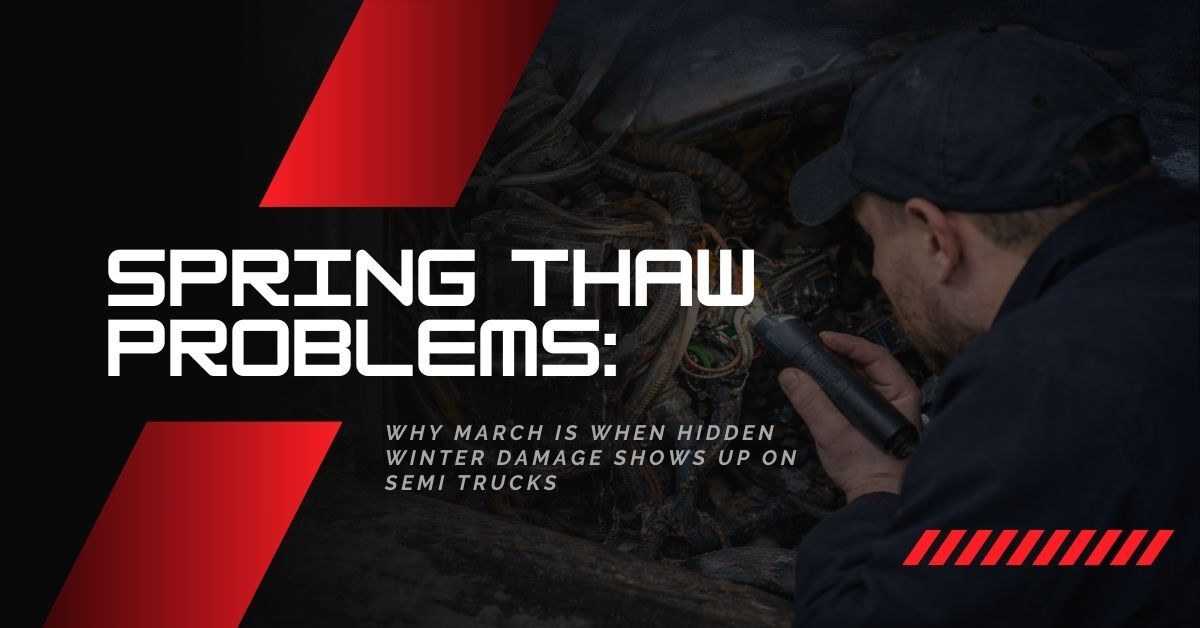
Winter does not always leave when the calendar changes. For many drivers and fleet operators, March is when the real problems begin. The snow may be gone, the roads may look better, and temperatures may start to rise, but the damage winter leaves behind often stays hidden until the spring thaw puts added stress on critical systems. That is why this time of year is so important for anyone running hard-working rigs and looking for dependable semi trucks parts.
During winter, moisture freezes, rubber contracts, and road grime builds up in the places drivers do not always see right away. Once March arrives, those frozen areas start to thaw, seals begin to shift, corrosion spreads faster, and worn parts finally start showing symptoms. What looked manageable in February can suddenly turn into air leaks, electrical failures, cooling issues, suspension noise, and visible exterior damage that affects both safety and uptime.
For owner-operators and fleets, spring is not just another season. It is the time to inspect, replace, and prepare. The trucks that stay ahead of these issues are the ones that avoid expensive downtime later in the season.
Why March Reveals Damage That Winter Hides
One of the biggest misconceptions in trucking maintenance is that winter damage always shows up during the coldest months. In reality, many problems stay hidden while temperatures remain low. Hoses can stay tight while frozen. Small cracks may not widen until warmer afternoons return. Corrosion can sit quietly inside connectors until moisture and temperature changes speed up the damage.
That is why March creates a perfect storm for repairs. A truck that seemed fine in late February may suddenly develop warning lights, rougher ride quality, reduced air pressure, or front-end issues once the thaw begins. This is especially true for drivers operating high-mileage tractors that have already been through repeated cold-start cycles, salted roads, potholes, and wet freight conditions.
This pattern is exactly why winter-to-spring maintenance matters so much for semi trucks parts in Orange County. Even in areas where trucks are not facing extreme snow every day, they still come back from routes with the effects of winter packed into the undercarriage, electrical system, suspension, and body components.
Road Salt, Moisture, and Corrosion Start Catching Up
Corrosion is one of the biggest reasons hidden winter damage starts showing up in March. Throughout winter, road salt and moisture settle into connectors, brackets, fasteners, lighting assemblies, and frame-mounted components. While temperatures remain low, some of that damage stays slow-moving. Once the weather shifts, corrosion becomes more active.
This matters for nearly every make on the road, but it can be especially frustrating for drivers looking for dependable Volvo truck parts after electrical or front-end issues begin to surface. A truck may start showing intermittent lighting problems, sensor communication faults, or harness-related issues that were not obvious a few weeks earlier. The same is true for drivers maintaining a Volvo VNL, where modern electrical systems and connectors need close inspection after a tough winter season.
Corrosion also affects trucks cosmetically and structurally. Mounting points, brackets, bumper supports, and lower front-end components can show the wear winter leaves behind. For that reason, March is also a smart time to inspect front-end parts that take constant road spray and impact.
Air System Leaks Often Start in Early Spring
Air systems go through a lot during winter. Moisture buildup, repeated freeze-thaw cycles, and vibration from rough roads all put stress on lines, fittings, seals, valves, and air-related components. Some leaks stay minor in freezing weather, then become more obvious when temperatures rise and materials expand again.
A driver may suddenly notice that air pressure builds more slowly in the morning. The compressor may cycle more often. Suspension may not hold evenly. Braking feel may change slightly. These are the types of symptoms that should not be ignored in March, because they often mean the truck is moving from minor wear into actual failure.
If the truck has also taken winter road hits to the front end, the damage can extend beyond air concerns. Drivers running Cascadias should inspect the lower front section closely, especially if rough roads, snowbanks, or debris were part of winter operations. A damaged or weakened Freightliner Cascadia bumper may not always stand out at first glance, but March is when cosmetic damage, loose mounting, and hidden alignment-related issues become easier to spot.
Suspension Wear Becomes More Noticeable When Roads Improve
Winter roads do not just affect tires. They punish suspension components every single day. Potholes, patched pavement, frost-heaved roads, and rough transitions all add impact stress to bushings, shocks, mounts, and front-end assemblies. The reason some of this does not get addressed right away is because winter driving conditions can mask the symptoms. When roads smooth out a bit in March, vibrations, looseness, and alignment issues become easier to notice.
Drivers may start feeling more steering play. They may notice uneven tire wear, clunking over smaller bumps, or more movement in the cab than usual. Those symptoms often point to suspension wear that has been building for months.
This is also why March is a good month to inspect lighting and front-end components together, particularly on trucks that have taken repeated road abuse. For Kenworth owners, worn or damaged front-end assemblies can sometimes show up alongside visibility issues, especially if winter grime and vibration have taken a toll on exterior parts. That makes this a smart time to look at T680 headlights and inspect whether the front assembly around the T680 bumper has held up through the season.
Electrical Problems Start Showing Up Fast in March
Electrical issues are one of the most common spring thaw problems on semi trucks. Winter creates the conditions, but March reveals the symptoms. Moisture works into connectors. Salt attacks terminals. Harnesses get stressed by vibration and extreme temperatures. Once thawing begins, the truck may start throwing faults that seem random at first but are often tied to corrosion or weakening connections.
This is one reason drivers often begin searching for Volvo truck parts near me or Volvo semi truck parts near me once spring starts exposing issues they could not fully diagnose during winter. A connector that worked well enough in January may no longer do its job consistently in March. ABS alerts, marker light issues, trailer connection problems, and communication faults can all start here.
For Southern California operators, availability matters just as much as diagnosis. When a truck is down or throwing warning lights, speed matters. That is where access to Volvo truck parts in Orange County and Volvo semi truck parts in Orange County becomes especially valuable for getting back on the road without waiting around on long parts lead times.
Cooling System Problems Often Start Quietly
A lot of drivers think of overheating as a summer issue, but cooling system damage often starts showing itself in spring. Winter puts stress on hoses, clamps, seals, and coolant pathways through constant temperature swings. Then March arrives and those weakened areas start to seep or fail.
That first small drip under the truck, the low coolant warning that appears once in a while, or the temperature gauge that seems a little less stable than normal can all point to winter damage finally surfacing. Left alone, those small issues can become serious before the hotter months even begin.
This is another reason spring inspections matter for anyone shopping for semi truck accessories or replacement parts. A truck that is already being checked for seasonal wear is the perfect candidate for preventive upgrades and repairs that keep it road-ready before freight demand climbs.
Exterior Damage and Front-End Wear Matter More Than Many Drivers Think
When people talk about winter truck damage, they often focus on brakes, air systems, or wiring. But the front end takes a beating too. Slush, road debris, ice chunks, pothole spray, and minor impacts all target the same visible areas again and again. That is why March is a good time to inspect bumpers, headlight assemblies, brackets, and other exposed components.
For Cascadia owners, a worn or damaged Freightliner Cascadia bumper is not just a cosmetic concern. It can affect mounting stability, protection, and the truck’s overall front-end condition. For T680 owners, cracked housings, weakened mounts, or visibility issues tied to T680 headlights should be addressed before spring routes get busier. The same goes for checking whether the T680 bumper has taken more damage than it first appears to have.
A truck that looks “mostly fine” after winter can still be carrying hidden front-end wear that gets worse fast if it is not corrected early.
Why Spring Is the Right Time to Buy Parts Before Peak Breakdowns Hit
March is a transition month, but it is also a preparation month. Freight starts moving harder in spring, maintenance schedules tighten, and the cost of downtime grows fast when a truck is supposed to be working. The fleets and owner-operators who use March wisely are usually the ones who avoid scrambling later.
This is where drivers often start looking for a semi truck parts store near me because they know a small issue now is better than a major failure later. Waiting until April or May can mean more competition for service slots, more urgent repairs, and more money lost to downtime.
For local operators, access to semi truck parts store in Orange County can make a big difference when timing matters. Whether the need is mechanical replacement parts, front-end components, or useful semi truck accessories in Orange County, having the right source nearby helps reduce delays and keeps trucks moving.
The Link Between February Repairs and March Failures
This March topic also connects naturally to the issues already covered in your February content. In Late-Winter Breakdown Triggers: The Hidden Damage Winter Leaves Behind on Semi Trucks, the focus was on the damage winter quietly causes before drivers fully realize what is happening. In Late-Winter Volvo VNL Problems Drivers Miss: Electrical Issues, the spotlight was on the kind of electrical trouble that often starts small and grows into bigger system failures. In Post-Winter Front-End Inspections Every Freightliner Cascadia Owner Should Do, the emphasis was on catching front-end wear before it gets ignored. And in Why February Is the Most Expensive Month for Semi Truck Repairs, the takeaway was clear: delays make repairs cost more.
March is where all of those themes come together. It is the month when hidden damage becomes visible, when deferred repairs start affecting uptime, and when smart operators decide whether to act early or pay more later.
What Drivers Should Check First in March
The best spring inspection strategy is not complicated, but it should be thorough. Start with the areas winter stresses most. Check electrical connectors, lighting, and harnesses for corrosion or weak connections. Inspect air lines, fittings, and related components for leaks or moisture-related wear. Look over suspension points, bushings, and front-end hardware for looseness or signs of impact damage. Inspect bumpers, lights, mounts, and exposed exterior parts that may have taken repeated abuse through winter conditions. Then check cooling system components before warmer temperatures make small problems worse.
This is also the right time to evaluate whether a truck needs replacement parts, upgrades, or practical semi truck accessories that support safer and more efficient spring operations.
Final Thoughts
March may feel like the end of winter, but for many trucks it is the beginning of winter’s repair bill. The spring thaw has a way of exposing what months of cold weather, road salt, moisture, and rough roads have been building underneath the surface. That is why hidden winter damage so often shows up now instead of earlier.
For drivers and fleets trying to stay ahead of breakdowns, March is the time to inspect aggressively and replace worn parts before small issues turn into expensive downtime. Whether you are maintaining a Volvo VNL, sourcing Volvo truck parts, looking for Volvo semi truck parts near me, or trying to find dependable semi trucks parts in Orange County, early action is what keeps trucks working when the season changes.
