
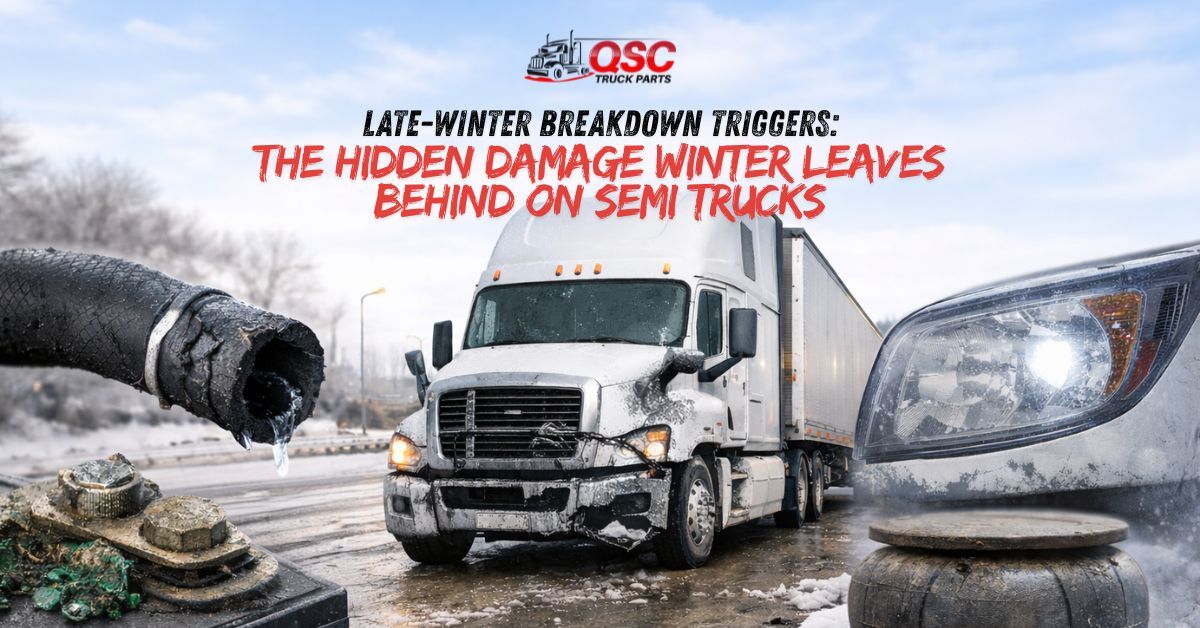
Winter doesn’t end when the cold starts ease — that’s when the damage shows up.
For many drivers, late winter is the most deceptive season. Engines start more easily, roads look clearer, and the worst seems over. But this is exactly when hidden winter damage begins turning into breakdowns. Semi trucks that survived weeks of cold starts, road salt, heavy loads, and overnight hauls often fail after the coldest weather passes.
Understanding late-winter breakdown triggers helps drivers address problems before they turn into roadside calls, missed deliveries, or expensive downtime — especially when sourcing the right semi truck parts becomes time-sensitive.
Quick Answer: Why Do Semi Trucks Break Down After Winter Ends?
Semi trucks break down in late winter because prolonged cold exposure weakens cooling systems, electrical connections, suspension components, headlights, and front-end parts. Once temperatures fluctuate, worn components fail rapidly — even if the truck ran fine during peak winter.
Why Late Winter Is Harder on Semi Truck Parts Than Mid-Winter
During extreme cold, systems operate under constant stress — but conditions are predictable. Late winter introduces temperature swings, moisture, thaw–freeze cycles, and road salt activation.
This combination:
- Expands and contracts materials
- Traps moisture inside components
- Exposes micro-cracks formed earlier in winter
- Accelerates corrosion on exposed metal
That’s why semi truck parts often fail after cold starts stop — not during them.
Cooling System Failures That Appear Late
Cooling systems don’t rest in winter — they absorb constant stress from cold starts and thick fluids. Late winter is when weaknesses finally surface.
Common late-winter failures include:
- Brittle coolant hoses cracking during warm-up
- Thermostats sticking open or closed
- Radiator seepage caused by freeze–thaw expansion
- Coolant dilution reducing freeze protection
Cooling components are among the most frequently replaced semi truck parts in late winter because failure tends to be sudden, not gradual.
Electrical Failures Caused by Winter Voltage Stress
Cold temperatures reduce battery output and strain electrical systems for weeks. Late winter is when marginal systems collapse.
Hidden electrical damage includes:
- Corroded battery terminals
- Weak ground connections
- Wiring insulation breakdown
- Alternator strain from repeated cold starts
This is why searches for semi truck parts store near me spike in late winter — trucks that ran fine earlier suddenly won’t start.
Headlights and Visibility Problems Drivers Miss
Visibility issues often go unnoticed until late-winter nights and wet roads make them unavoidable.
Common problems include:
- Moisture trapped inside headlight housings
- Dimming output from voltage loss
- Cracked lenses from ice impact
- Misalignment caused by front-end flex
Headlights are among the most overlooked semi truck accessories, yet they directly affect safety and DOT visibility compliance.
This issue is explored further in: Cold Starts and No-Starts: Why Semi Trucks Struggle in January (And the Parts That Fix It)
Suspension Damage That Only Shows After Winter
Suspension systems take a beating all winter — potholes, frozen roads, uneven loads, and shifting weight.
Late-winter suspension failures often involve:
- Air bags developing leaks once rubber warms
- Height control valves sticking
- Shock absorbers losing damping ability
- Mounting hardware loosening after freeze cycles
These failures rarely trigger dash warnings but can dramatically affect ride stability and braking.
Front-End and Bumper Damage From Winter Roads
Road salt, ice chunks, frozen debris, and wildlife impacts concentrate damage at the front of the truck.
Late-winter inspections frequently uncover:
- Hairline bumper cracks
- Bent brackets
- Corrosion at mounting points
- Alignment shifts affecting headlights
This is especially common on high-impact platforms like the Freightliner Cascadia bumper, where winter debris and salt accelerate wear.
Why many fleets reassess repairs after winter: Aftermarket vs OEM in Winter: Why More Truck Owners Switch After January Breakdowns
Brand-Specific Wear Drivers See After Winter
Late winter is also when platform-specific issues become obvious:
- Volvo truck parts often show electrical and suspension fatigue after prolonged cold exposure
- Volvo VNL platforms commonly reveal front-end and mounting stress once temperatures fluctuate
- Kenworth T680 headlights and T680 bumpers frequently show moisture intrusion or alignment issues after winter debris exposure
These problems don’t always trigger fault codes — but they do trigger downtime.
Air System Moisture and Brake Issues
Moisture accumulation during winter becomes most dangerous late in the season.
Late-winter failures include:
- Frozen air lines during overnight temperature drops
- Moisture-compromised air dryers
- Brake response delays
- Pressure-loss warnings
Air system failures often immobilize trucks without warning — especially during early morning starts.
Why Late Winter Is Peak Season for Semi Truck Accessories
Drivers often focus on major repairs, but semi truck accessories play a critical role in late-winter reliability.
High-impact upgrades include:
- LED lighting for extended low-light conditions
- Reinforced bumpers and guards
- Heated mirrors
- Improved exterior visibility components
These upgrades reduce risk during the most failure-prone part of the season.
Why Addressing Late-Winter Damage Matters
Ignoring late-winter issues leads to:
- Spring breakdowns
- Higher repair costs
- Missed deliveries
- Extended downtime during peak freight months
For a structured inspection approach, see: Late-Winter Truck Maintenance Reset: What Freightliner Cascadia Owners Should Inspect After Holiday Hauling
Conclusion
Late winter isn’t a recovery period — it’s a reveal.
The damage winter leaves behind on semi trucks doesn’t always appear during the coldest weeks. It shows up later, when systems warm, moisture spreads, and stressed components finally give out.
By inspecting critical semi truck parts and reinforcing high-risk systems before spring hauling ramps up, drivers avoid preventable downtime and costly emergency repairs.
What to Do Before the Next Breakdown
Late winter is when hidden damage turns into real downtime — but it doesn’t have to.
QSC Truck Parts specializes in aftermarket semi truck parts and accessories, offering direct-fit solutions built for real-world winter recovery. Whether you’re addressing cooling issues, electrical weak points, lighting problems, suspension wear, or front-end damage, having the right parts ready makes all the difference.
Inspect early. Replace smart.
Winter may be ending — but uptime still matters.
