
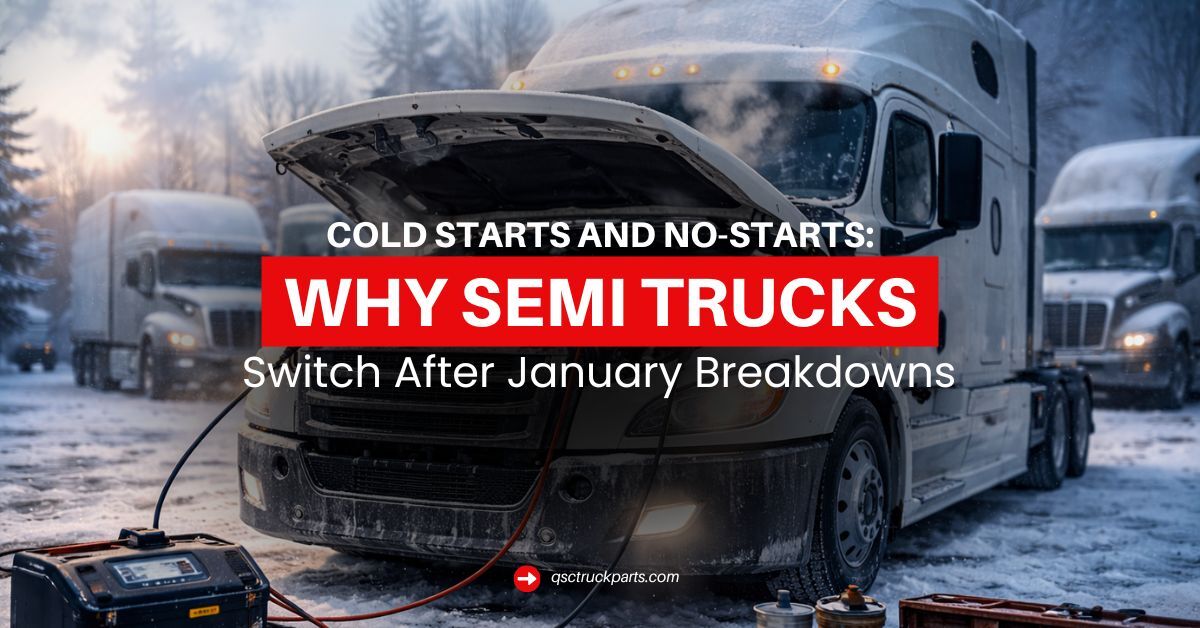
January is the most punishing month for semi trucks. Sub-freezing temperatures, overnight parking, thickened fluids, and high electrical demand all collide — and that’s when cold starts turn into no-starts.
When drivers search “semi truck parts near me” in January, it’s usually because the truck won’t fire up and time is running out.
Important note:
QSC Truck Parts sells aftermarket semi truck parts only.
No OEM or genuine manufacturer parts are offered.
This guide explains why semi trucks struggle to start in January, which components fail most often, and how aftermarket semi truck parts help get trucks moving again in extreme cold.
Quick Answer: Why Do Semi Trucks Have Trouble Starting in January?
Semi trucks struggle to start in January due to reduced battery output, increased electrical resistance, thickened engine fluids, fuel gelling, and worn cold-start components. Replacing weak systems with reliable aftermarket semi truck parts significantly reduces winter starting failures.
For a broader preventive approach that helps catch issues before cold weather exposes them, see Freightliner Cascadia Preventive Maintenance Checklist: Essential Aftermarket Parts to Inspect Every Season
Batteries: The #1 Cause of Cold-Start Failures
Cold weather can cut battery output dramatically. A battery that worked fine in December can fail overnight once temperatures drop further.
Common battery-related issues include:
- Low cold-cranking amps (CCA)
- Corroded or loose terminals
- Weak or mismatched battery sets
- Slow or clicking crank during startup
Battery failure is the top reason drivers search semi truck parts store near me in January.
Fix:
Replace weak units with cold-rated aftermarket batteries and ensure all cables and terminals are clean and secure.
Electrical System Weakness Exposed by Cold
Cold increases electrical resistance and instantly exposes weak wiring.
Inspect:
- Battery cables and ground straps
- Corrosion at terminals
- Starter connections
- Alternator output
Many January no-starts are electrical failures — not engine problems.
For drivers weighing simple fixes versus shop repairs during winter emergencies, see DIY Volvo Truck Part Replacements: When to Do It Yourself and When to Call the Pros
Engine Oil & Thick Fluids Slow Cranking
Low temperatures thicken engine oil, forcing starters to work harder.
Watch for:
- Slow, labored cranking
- Delayed ignition
- Oil pressure warnings after startup
Fix:
Use winter-grade fluids and ensure oil-related components are functioning properly before deep freezes continue.
Fuel Gelling and Delivery Problems
Diesel fuel can gel in extreme cold, blocking fuel flow and preventing ignition.
Signs of fuel-related no-starts:
- Engine cranks but won’t fire
- Rough starts followed by stalling
- Plugged fuel filters
Fix:
Inspect and replace fuel filters with aftermarket cold-weather-rated filters and ensure fuel systems are winter-ready.
For a more complete winter-prep checklist covering fuel, batteries, and accessories, see Winterizing Your Semi Truck: Preparing for Cold Weather With the Right Parts and Accessories
Glow Plugs, Sensors & Cold-Start Components
Cold starts rely on components designed specifically for low temperatures.
Common failures include:
- Glow plugs
- Temperature sensors
- Cold-start relays
When these fail, engines may crank endlessly without ignition.
Fix:
Aftermarket replacements are widely used because they’re faster to source during winter emergencies and built for cold performance.
Starter Motor Fatigue in Winter
Starters work harder in January than any other month.
Warning signs:
- Clicking without cranking
- Slow engine rotation
- Intermittent starting
Fix:
Replacing worn starters with dependable aftermarket semi truck parts restores reliable ignition during freezing mornings.
Why Aftermarket Semi Truck Parts Make Sense in January
Winter breakdowns don’t wait for dealership backorders.
Aftermarket semi truck parts offer:
- Faster availability during winter emergencies
- Lower cost than OEM replacements
- Direct-fit compatibility
- Proven cold-weather durability
That’s why many January searches for semi truck accessories and replacement parts lead drivers to aftermarket solutions that get trucks back on the road fast.
Frequently Asked Questions About January No-Starts
Why does my semi truck start fine in fall but not in January?
Cold temperatures reduce battery power, thicken fluids, and expose weak components that weren’t noticeable earlier.
Are aftermarket semi truck parts reliable in winter?
Yes. High-quality aftermarket parts are engineered for harsh conditions and widely used by fleets and owner-operators.
What parts fail most often during cold starts?
Batteries, electrical connections, fuel filters, glow plugs, and starter motors are the most common January failure points.
Does QSC Truck Parts sell OEM parts?
No. QSC Truck Parts sells aftermarket semi truck parts only.
Conclusion
Cold starts and no-starts aren’t random — they’re predictable winter failures. January simply exposes the weak points built up during fall and holiday hauling.
By addressing batteries, electrical systems, fuel delivery, and cold-start components — and replacing worn items with dependable aftermarket semi truck parts — drivers can eliminate most winter starting problems before they happen.
Preparation is the difference between rolling at sunrise or waiting on a tow in sub-zero temperatures.
